

GM Bluetooth Use Case
Industry
- Automotive
- Recreational Vehicles (RV) & HVAC
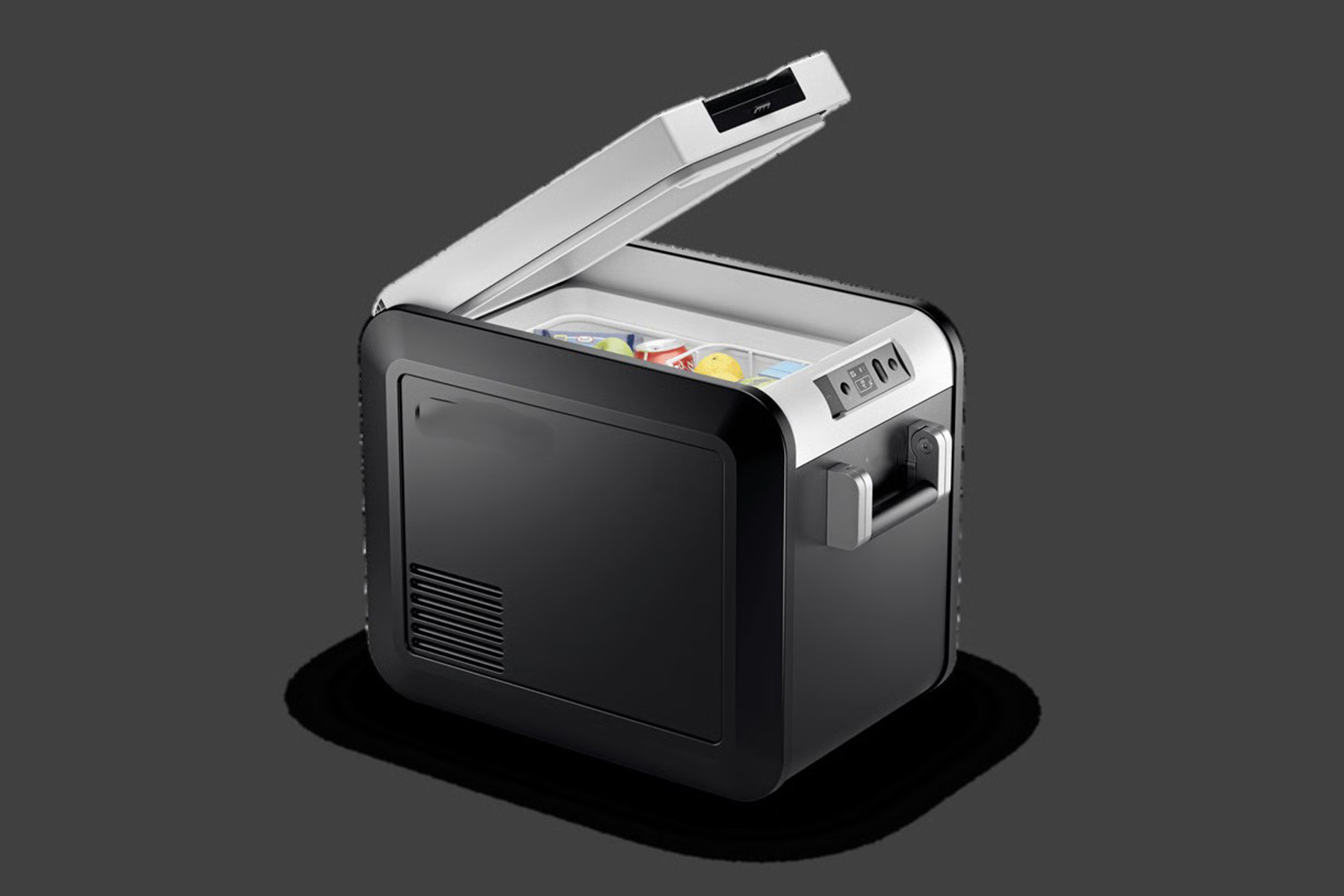
Bluetooth-Controlled Mini Fridge for RV Centre Console with Fault Reporting
Dometic Group, is a Swedish company specializing in products for the outdoor, recreational vehicle (RV), marine, and hospitality industries, focusing on areas such as Food & Beverage, Climate, and Power & Control. Headquartered in Solna, Stockholm, Sweden, Dometic operates globally, with a significant presence in the United States. The company employs approximately 8,000 people worldwide.
Client Requirements
Involvement from i5
Hardware design, software design and development, software and system Testing.
General Requirements
❖ Functionality
- The mini fridge must provide cooling functionality with adjustable temperature settings, suitable for RV applications.
- The system must integrate seamlessly into GM RV vehicles, particularly within the center console.
- Include elatches for secure and smooth door opening and closing.
- Provide high reliability and durability for rugged RV environments.
❖ Technical Requirements
01 ECU Configuration
The system should include two ECUs
- Main ECU : Combines fridge control logic with a BLE interface controller.
- Compressor ECU : Dedicated to controlling the fridge’s compressor for efficient cooling.
02 Bluetooth Communication
- Enable BLE-based communication between the fridge controller (slave node) and the master node (entertainment system).
- The fridge must support the following BLE operations:
- Accept commands from the master node for temperature settings and mode control.
- Send operating status (e.g., current temperature, compressor status) to the master node.
- Report faults or error conditions (e.g., sensor failure, door left open) to the master node.
03 Temperature Management
- Integrate high-precision temperature sensors to monitor and report internal temperatures accurately.
- Support a user-configurable temperature range for the fridge, with real-time feedback to the master node.
04 Cooling System
- Implement safety mechanisms to prevent compressor overheating or damage.
- Multiple modes and setpoints
❖ Sensors and Actuators
01 Temperature Sensors
- Use reliable sensors capable of detecting a wide temperature range with high accuracy.
- Ensure redundancy or fault detection mechanisms for temperature sensing.
02 Elatches
- Provide motorized elatches for door opening and closing.
- Integrate door status sensors to detect whether the door is open or closed and report the status to the master node.
❖ Fault Monitoring
- Monitor system health, including compressor operation, temperature sensors, and door elatch status.
- Detect and report specific fault conditions, such as:
- Compressor failure or inefficiency.
- Sensor malfunction.
- Door left ajar for an extended period.
- Communication failure between the main and compressor ECU.
❖ Fault Reporting
- Provide fault status to the master node via BLE in a structured format for user alerts.
❖ Power Management
01 Power Efficiency
- Optimize power consumption to minimize the load on the RV’s battery system.
- Support low-power modes when the fridge is idle or not in use.
02 Voltage and Current Requirements
- Design the system to operate within the RV’s standard electrical power range.
What is delivered
❖ Hardware Design
- Completed schematics and PCB layouts.
- Bill of Materials (BOM) with selected components.
❖ Firmware
- Code for Main FCU module.
- Fully functional software for the main ECU.
- Documentation of BLE communication protocols and API details.
❖ Test Reports
- Hardware Reports, Validated for circuit designs and ensure proper functioning of PCBs.
- Test power supplies for voltage and current stability under load.
- System testing reports
- Unit and static testing reports
- Software qualification test reports.
❖ Documentation
- System requirements
- System Test cases
- System architecture and Design documentation
- Software requirements
- Software detailed design and Architecture
- Unit test cases
- User manuals, maintenance guides, and troubleshooting documentation.
Innovative Solutions, Techniques, and Technologies
❖ Innovative Solutions
01 BLE Communication Integration
- Designed a robust BLE interface for seamless communication between the fridge (slave) and the entertainment system (master node).
- Incorporated advanced power-saving features of BLE to ensure low energy consumption, crucial for RV environments.
02 Fault Monitoring and Reporting
- Developed an intelligent fault-detection system that monitors compressor performance, sensor health, and door status.
- Fault information is communicated in real-time to the master node, enabling proactive maintenance.
03 Adaptive Cooling Algorithm
- Designed an adaptive cooling control algorithm to adjust compressor operation based on real-time temperature readings and user settings.
- This improved energy efficiency and minimized wear on components.
04 Compact PCB Design with Thermal Management
- Created a compact PCB layout optimized for space constraints within the RV center console.
- Integrated heat sinks and efficient thermal management techniques to ensure reliable operation in confined spaces.
05 Secure Door Mechanism
- Used motorized elatches with integrated sensors for door position detection and secure closing, preventing accidental opening during vehicle movement.
06 Interoperability with RV Master Node
- Designed the system to be compatible with existing GM RV infotainment systems, ensuring a seamless user experience.
❖ Techniques and Technologies
01 Hardware Design
- Microcontroller Selection: Used a low-power microcontroller with BLE support and automotive-grade reliability.
- Sensor Integration: High-accuracy temperature sensors and door status sensors with fail-safe mechanisms.
02 BLE Communication
- Employed Bluetooth 5.0 for enhanced range, faster data transfer, and energy efficiency.
- Used GATT profiles for structured communication of commands, operating status, and fault data.
03 Power Management
- Used low-power sleep modes for the ECUs when the fridge is inactive.
04 Firmware Development
- Modular firmware architecture with reusable drivers for sensors, actuators, and BLE.
- Own scheduler to manage tasks like BLE communication, temperature monitoring, and fault detection with precise timing.
05 Security
- Implemented BLE communication encryption for secure data exchange between the fridge and master node
- Added tamper detection for the door mechanism.
❖ Industry Standards Maintained
01 Bluetooth Standards
- Bluetooth SIG Standards: Adhered to BLE 5.0 specifications for interoperability and performance.
02 Environmental Standards
- Used RoHS-compliant components to ensure environmentally safe design.
03 Energy Efficiency
- Followed ENERGY STAR guidelines for optimizing energy usage in cooling systems.
Client-Specific certification
01 CG2999 Compliance (GM-Specific Requirements)
- Provided detailed documentation adhering to GM’s CG2999 standards for product approval.
- Included technical design, safety analysis, fault detection strategy, and environmental test results.
02 Design Validation Plan (DVP)
- Supplied a comprehensive DVP report, detailing test procedures, results, and compliance to GM’s specifications.
03 Process Failure Modes and Effects Analysis (PFMEA)
- Delivered a PFMEA analysis to identify potential risks during the manufacturing and operational phases.
04 Production Part Approval Process (PPAP)
- Documented compliance with GM’s PPAP requirements for supplier parts and systems.
Project Timeframe and Delivery
01 Timeframe Given: 15 months
- This included all phases: Hardware design, Software design and development, Software and System Testing.
02 Actual Delivery: 11 months
- The project was completed 3+ months ahead of schedule, demonstrating efficient planning, execution, and collaboration across all teams
This early delivery highlights the team's commitment to excellence and ability to meet client requirements within tight timelines while maintaining quality standards.
Client Benefits of Working with i5 Systems
01 Early Delivery
- The project was delivered in 14 months (including certification), a full 1 month ahead of schedule, allowing the client to accelerate their product launch and gain a competitive edge in the market.
02 Innovative Solutions
- Delivered a dual-ECU architecture that optimized system performance and scalability, meeting GM's specific requirements while maintaining modularity for future upgrades.
- Implemented advanced fault monitoring and reporting systems to enhance the fridge's reliability and operational efficiency.
03 Cost-Effective Design
- Designed energy-efficient systems that reduced power consumption, aligning with GM's focus on energy optimization for RVs, resulting in long-term cost savings for end-users.
Client Feedback and Satisfaction
01 Timely Delivery
- Feedback: The client appreciated that the project was delivered one month ahead of schedule despite its complexity.
- Impact: This allowed the client to meet their production timelines and gain a competitive edge by introducing the feature to the market earlier than planned.
02 Quality and Reliability
- Feedback: The client commended the robustness and reliability of the hardware and software systems, particularly the dual-ECU design and fault monitoring features.
- Impact: This enhanced the end-user experience and reduced the likelihood of field issues, which is critical for automotive products.
03 ASPICE- CL1 Standards and Documentation Excellence
- Feedback: Initially, the project was planned without ASPICE compliance. However, i5 Systems delivered the project in accordance with ASPICE CL1 standards,with high-quality documentation and tools. The client appreciated this unexpected addition, which elevated the project’s quality and usability.
- Impact: The project became a gap analysis benchmark for future developments within GM, streamlining future compliance efforts and setting a standard for documentation excellence.
04 Communication and Collaboration
- Feedback: The client highlighted the clear and proactive communication throughout the project lifecycle.
- Impact: This fostered trust and ensured alignment with their requirements, avoiding delays or misunderstandings.
05 Innovation and Problem-Solving
- Feedback: The client was impressed by the innovative solutions, particularly the adaptive cooling algorithm, energy efficiency optimizations, and secure BLE communication.
- Impact: These innovations added significant value to the product, aligning with the client’s vision of enhancing user convenience and operational efficiency.